 From the library · on its shelf
Literature
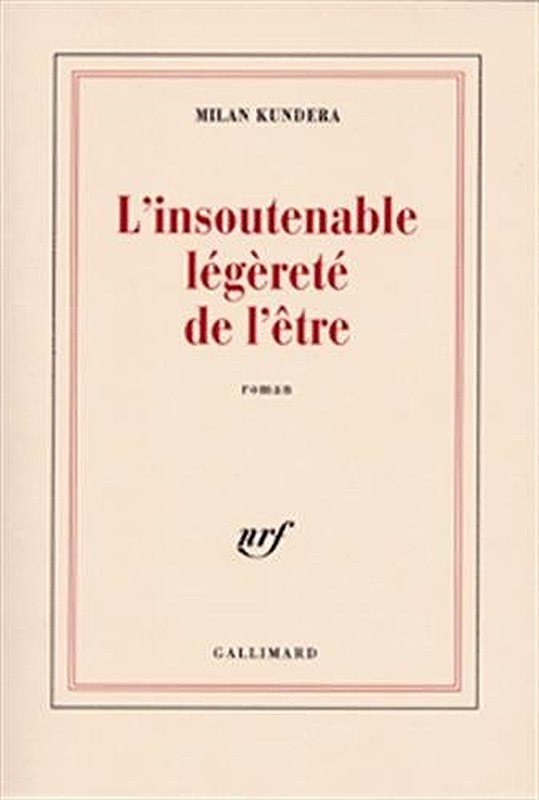
L'insoutenable légèreté de l'être
Milan Kundera
The Unbearable Lightness of Being
“What has remained of the dying of Cambodia? A large photograph of the American star holding a yellow child in her arms. What has remained of Tomas? An inscription: He wanted the Kingdom of God on earth. What has remained of Beethoven? A morose man with an improbable mane of hair, pronouncing in a sombre voice: ‘Es muss sein!’ What has remained of Franz? An inscription: After a long wandering, the return. And so on, and so on. Before being forgotten, we shall be turned into kitsch. Kitsch is the relay station between being and oblivion.”
More than Kundera's other novels, this one is a love story. Tereza is jealous. Her jealousy, tamed by day, awakens at night, disguised as dreams that are in fact poems about death. On her long path, the young woman is accompanied, for her husband, Tomas, half Don Juan, half Tristan, is torn between his love for her and his insurmountable libertine temptations.
The fate of Sabina, one of Tomas's mistresses, extends the fabric of the novel to the whole world. Intelligent and sentimental, she leaves Franz, her great Genevan love, and runs after her freedom, from Europe to America, only to find, in the end, nothing but “the unbearable lightness of being”.
Indeed, which quality (gravity or lightness) best corresponds to the human condition? And where does seriousness stop and give way to the frivolous, and vice versa? With his art of paradox, Kundera poses these questions through a text built from a few simple elements that are constantly enriched with new nuances, in a play of variations where narrative, dream and reflection, prose and poetry, recent history and ancient history are united. Never, perhaps, in Kundera's work, have gravity and casualness been so united as in this text. Death here wears a double face: that of a soft, dreamlike sadness, and that of a cruel, black farce.
For this novel is also a meditation on death: that of individuals, but also, potentially, that of our old Europe.
(Back cover of the 1984 Gallimard edition)