 From the library · on its shelf
Literature
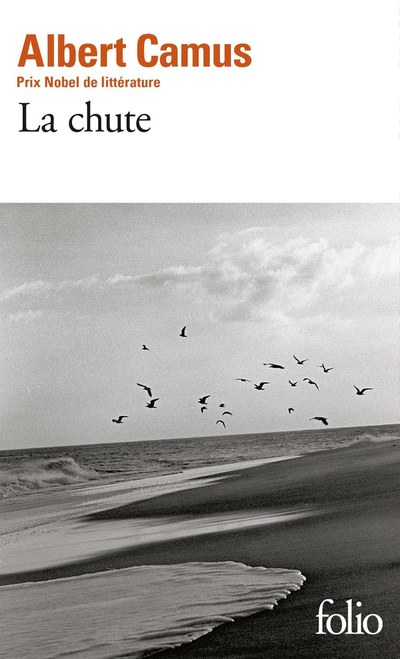
La Chute
In 1953, in the full turmoil of the Cold War and the criticism that followed the publication of L'Homme révolté, the essay that appeared in 1951 and completes the cycle of revolt, Camus goes through a new drama: his wife Francine attempts suicide while in hospital. How? She lets herself be thrown from the window… But what does this fall symbolise? And how does it irremediably bind Camus to his destiny? This fall is what will drive the writer to keep writing, so that the world never comes undone, caught once again within absurd partitions, unable to understand tomorrow and refusing yesterday. But this time the absurd is different: it has a taste of anger, of guilt. That of Jean-Baptiste Clamence, another malevolent double of the author, who, through monologue and Dostoevskian polyphonic conclave, builds up a story, his own, which we understand later through the truth and the grace it engenders, a story that is also that of humanity. If Camus here produces one of his finest texts, moving and profound, describing a man's weakness before a woman's beauty in a Baudelairean manner, or simply the contemplation of people walking in the street as seen from this window in Amsterdam, he also demonstrates, within the space of 150 pages, new literary motivations that are anything but incidental to the Stockholm academy's choice to name the writer Nobel Prize winner in literature, in November 1957.
Marius Lambert
Book description: 1956. PARIS, Gallimard – (1956/1972) – Folio collection
“On the bridge, I passed behind a shape leaning over the parapet, and which seemed to be looking at the river. From closer up, I made out a slim young woman, dressed in black. Between her dark hair and the collar of her coat, one could see only the nape of her neck, fresh and damp, to which I was not indifferent. But I continued on my way, after a moment's hesitation. I had already gone about fifty metres when I heard the sound, which despite the distance seemed tremendous to me in the nocturnal silence, of a body striking the water. I stopped short, but without turning round. Almost at once, I heard a cry, repeated several times, which likewise went down the river, then suddenly died away.”